
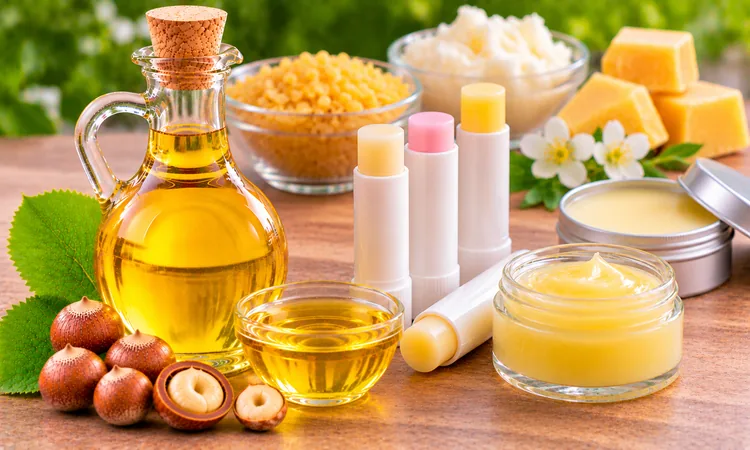
Overview. Lip balms and cosmetic lip care products require a balance of structure, spreadability, surface feel and stability. Refined hazelnut oil may be evaluated as a liquid botanical emollient in selected formulations. Its inclusion can influence texture, application glide and oil-phase behavior, depending on the wax system, other emollients and manufacturing conditions.
Refined Hazelnut Oil in Cosmetic Lip Care Formulations
Lip care formulations commonly combine waxes, liquid oils, butters and other cosmetic ingredients to create a defined application experience.
Refined hazelnut oil contains predominantly unsaturated fatty acids, particularly oleic acid, and may be considered as part of the liquid oil phase in selected lip balm and lip care product development.
Its compatibility and appropriate concentration should be established through formulation and finished-product testing rather than assumed from the oil's composition alone.
Potential Lip Care Applications
Cosmetic manufacturers may evaluate refined hazelnut oil in different product formats:
- Lip balm sticks: Investigation of the liquid oil fraction in wax-structured products.
- Lip care pots and jars: Evaluation of spreadability, softness and application consistency.
- Lip conditioning oils: Assessment of botanical emollient blends and application feel.
- Specialty cosmetic lip products: Controlled evaluation of texture, sensory performance and packaging.
The final product must be suitable for lip application and comply with the applicable cosmetic regulations.
Wax-to-Oil Ratio and Balm Structure
Wax-to-oil balance is a key consideration in solid lip balm formulations. Waxes and other structuring ingredients create a network that helps retain the liquid oil fraction.
Increasing refined hazelnut oil content may soften a balm or change its application behavior, depending on the complete formula.
Excessive liquid oil may reduce stick strength or contribute to sweating. Manufacturers should evaluate the interaction between the selected waxes, oils and butters before finalizing the formulation.
Stick Hardness and Mechanical Stability
Lip balm sticks must maintain suitable physical strength during handling, storage and application.
Important performance characteristics include hardness, resistance to breakage, adhesion within the package and consistent payoff.
Test methods may include controlled penetration or hardness measurements, breakage assessments and application trials at defined temperatures.
Application Glide, Payoff and Sensory Properties
Payoff describes how much product transfers from a lip balm stick during application.
Glide and payoff depend on wax composition, liquid oil content, finished-product structure and application conditions.
Refined hazelnut oil may influence the sensory characteristics of the final product, but the result must be measured in the complete formulation.
Manufacturers should evaluate smoothness, spreadability, residual feel and uniformity using controlled sensory methods.
Crystallization and Cooling Control
Lip balm structure develops as waxes and other solid lipid ingredients cool and crystallize.
Processing temperature, cooling rate and the composition of the oil phase can influence the final texture.
Inconsistent cooling or incompatible fat systems may contribute to graininess, surface defects or undesirable changes during storage.
Manufacturers should document heating, filling and cooling conditions when comparing experimental formulations.
Sweating, Oil Separation and Temperature Stability
Sweating describes the appearance of liquid oil on the surface of a wax-structured product.
It may occur when the formulation does not adequately retain the liquid lipid fraction, particularly under elevated or fluctuating temperatures.
Refined hazelnut oil should be evaluated within the complete wax and oil system to determine whether the final balm remains stable during transportation and normal storage.
Elevated-temperature and thermal-cycle trials can help identify potential packaging and product stability problems.
Oxidative Stability and Shelf-Life Considerations
Unsaturated botanical oils may oxidize when exposed to unfavorable storage conditions.
Oxidation can influence odor, taste perception, color and the overall acceptability of lip care products.
Manufacturers may monitor peroxide value, other appropriate oxidation indicators and sensory changes during stability studies.
Packaging protection, light exposure and storage temperature should also be considered. No guaranteed shelf life is implied by the raw material specification.
Flavor, Fragrance and Lip Safety
Lip care products may contain flavorings, fragrance ingredients or pigments. Their suitability must be assessed for the intended lip application.
Manufacturers should review relevant cosmetic restrictions, ingredient concentration limits, potential sensitization and foreseeable incidental oral exposure.
Not every fragrance or flavor suitable for another product category is appropriate for cosmetic lip care.
Manufacturing and Quality Controls
Industrial lip balm production requires controlled ingredient handling, heating, blending, filling and cooling.
Important process controls include:
- Raw-material identification and quality verification.
- Accurate weighing of waxes, oils and other ingredients.
- Controlled melting and mixing temperatures.
- Uniform ingredient distribution.
- Consistent filling temperature and fill weight.
- Validated cooling conditions.
- Packaging integrity and batch traceability.
Anhydrous lip balms may have different preservation requirements from water-containing lip products. Appropriate hygiene and microbial risk assessments remain necessary.
Recommended Lip Balm Formulation Tests
Product development should compare reference formulations with controlled changes to the refined hazelnut oil fraction.
Relevant evaluations include:
- Stick hardness and mechanical strength.
- Breakage and package retention.
- Payoff, glide and application consistency.
- Surface sweating and oil separation.
- Graininess and crystallization behavior.
- Elevated-temperature and thermal-cycle stability.
- Oxidative and sensory stability.
- Packaging compatibility and cosmetic safety.
Final validation should reflect the intended packaging, distribution environment and product use conditions.
Refined Hazelnut Oil Technical Specifications
Consistent raw-material quality supports repeatable cosmetic formulation development. The stated refined hazelnut oil parameters include:
| Quality Parameter | Stated Value |
|---|---|
| Free Fatty Acids (FFA) | Maximum 0.3% |
| Moisture Content | Maximum 0.2% |
| Oleic Acid | 74.2–86.7% |
These values describe stated raw-material acceptance parameters. They do not establish cosmetic safety, stick hardness, heat resistance or finished-product shelf life.
Cosmetic manufacturers may require additional quality, purity, contaminant and safety documentation according to their product requirements.
Review the refined hazelnut oil technical specifications and confirm available current batch documentation.
Cosmetic Safety, INCI and Regulatory Compliance
Hazelnut seed oil is commonly identified in cosmetic ingredient nomenclature as Corylus Avellana (Hazel) Seed Oil. The correct INCI designation should be verified for the actual supplied material.
Lip products require suitable cosmetic safety assessment, including evaluation of foreseeable exposure and any relevant ingredients used alongside the oil.
Hazelnut is a tree nut, so potential allergen and sensitization concerns must also be assessed. Refining alone does not establish the absence of all allergenic material.
For European Union cosmetic products, relevant obligations include Regulation (EC) No 1223/2009, as applicable. Other destinations may impose different requirements.
No medicinal, wound-healing or therapeutic claims are made for the supplied refined hazelnut oil.
Bulk Refined Hazelnut Oil for Lip Care Manufacturers
Atlas Global Trading supplies refined hazelnut oil to international industrial and wholesale ingredient buyers. Cosmetic manufacturers evaluating botanical lip care ingredients may enquire about current specifications and available commercial supply arrangements.
Bulk packaging formats include:
- 30 kg plastic drums: Smaller industrial purchasing requirements.
- 60 kg plastic drums: Intermediate bulk ingredient supply.
- 200 kg plastic drums: Larger-volume cosmetic manufacturing procurement.
- Larger export and tanker formats: Subject to commercial volume and logistics feasibility.
Atlas Global Trading supplies refined hazelnut oil as a bulk raw material, not finished lip balms, lip oils or retail-ready cosmetic lip care products.
Commercial Procurement and Documentation
Professional buyers should define their intended lip care application, required material grade, purchasing volume, packaging preference and delivery destination.
Commercial discussions may include current specifications, available batch documentation, cosmetic ingredient qualification, packaging, shipment planning and applicable trade terms.
Buyers should confirm raw-material suitability and regulatory requirements before incorporating the oil into a commercial cosmetic product.
Share your intended lip balm or lip care application, expected purchasing quantity, preferred packaging, delivery destination and technical documentation requirements. Our team will review your inquiry and discuss available bulk supply options.