
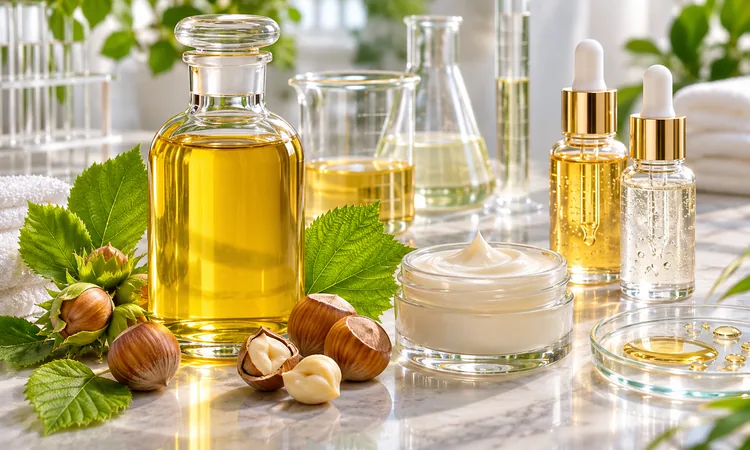
Overview. Facial serum emulsions combine a carefully selected oil phase with water-based ingredients to create lightweight skin care products with controlled texture and application characteristics. Refined hazelnut oil may be evaluated as an emollient component in these formulations, contributing to the lipid phase while allowing cosmetic developers to adjust skin feel, viscosity and overall product performance.
The Role of Refined Hazelnut Oil in Facial Serum Formulations
Hazelnut seed oil, commonly identified in cosmetic ingredient nomenclature as Corylus Avellana (Hazel) Seed Oil, is a vegetable-derived lipid ingredient used in selected cosmetic formulations for its emollient properties.
Refined hazelnut oil contains a high proportion of oleic acid and other fatty acids that influence its liquid oil characteristics. When incorporated into a suitable cosmetic system, it may contribute to the desired spreading behavior, lubrication and sensory properties of the finished serum.
Unlike a simple anhydrous facial oil, an emulsion serum contains dispersed droplets stabilized within a continuous phase. Consequently, the selection of emulsifiers, oil concentration and processing conditions is important for obtaining consistent product appearance and stability.
Facial Serum Emulsion Types and Ingredient Compatibility
Refined hazelnut oil is generally incorporated into the oil phase of a cosmetic formulation. The appropriate system depends on the intended product format, sensory characteristics and manufacturing process.
Potential formulation approaches include:
- Oil-in-water (O/W) serum emulsions: Oil droplets are dispersed within a continuous aqueous phase, commonly used when a lighter, fluid skin care texture is desired.
- Water-in-oil (W/O) systems: Water droplets are dispersed within a continuous oil phase, producing different sensory and barrier characteristics.
- Low-viscosity emulsion serums: Fluid formulations requiring careful control of droplet distribution, rheology and dispensing performance.
- Multi-emollient formulations: Refined hazelnut oil may be combined with other compatible cosmetic oils or esters to develop a targeted sensory profile.
Emulsion suitability should be established through laboratory formulation work. No single emulsifier, concentration or processing method is universally appropriate for all hazelnut oil serum systems.
Emollient Properties and Sensory Performance
The choice of emollient oil influences how a facial serum spreads across the skin and how the finished product feels during and after application.
Refined hazelnut oil may be considered when developing formulations intended to balance emolliency with a fluid, easily spreadable texture. However, perceived lightness, residual oiliness and absorption characteristics depend on the complete formulation rather than the oil ingredient alone.
Formulators should assess spreading, initial slip, after-feel, appearance and compatibility with other ingredients through comparative sensory trials. Cosmetic performance claims should be supported by suitable testing.
Processing and Emulsification Considerations
In industrial facial serum production, refined hazelnut oil is typically introduced during preparation of the oil phase or at a validated processing stage according to the chosen emulsification method.
Equipment selection and manufacturing parameters may influence droplet formation and stability. High-shear mixers, rotor-stator homogenizers or other suitable emulsification systems may be used depending on formulation design.
Key manufacturing considerations include:
- Oil-phase concentration: Establish an appropriate usage level through formulation screening and trials.
- Emulsifier compatibility: Select an emulsification system appropriate for the oil phase and intended product structure.
- Processing temperature: Control thermal exposure in accordance with the complete formulation and ingredient requirements.
- Mixing conditions: Optimize shear, mixing duration and addition sequence to achieve repeatable results.
- Packaging compatibility: Verify that the final viscosity and emulsion characteristics are suitable for droppers, pumps or airless dispensing systems.
Manufacturing teams should document process conditions and compare pilot batches under controlled parameters before commercial scale-up.
Emulsion Stability and Quality Testing
Stability testing is essential when introducing refined hazelnut oil into a new or modified facial serum formulation.
Oil substitution can influence emulsion droplet formation, viscosity, appearance and long-term physical stability. Testing should examine both the freshly manufactured product and samples stored under representative conditions.
Recommended evaluations may include:
- Droplet size distribution and changes over time.
- Viscosity, flow behavior and dispensing performance.
- Visual separation, creaming or sedimentation.
- pH monitoring where relevant to the formulation.
- Color, odor and other indicators of oil oxidation.
- Accelerated and real-time stability assessments.
- Microbiological quality and preservative effectiveness for applicable water-containing systems.
- Compatibility with the selected primary packaging.
Centrifugation, temperature cycling and accelerated storage testing may provide useful comparative information, but they should not replace an appropriately designed shelf-life and finished-product validation program.
Refined Hazelnut Oil Technical Specifications
Ingredient quality is an important factor in cosmetic formulation consistency. Manufacturers should review relevant raw-material specifications and qualify each ingredient according to their quality management procedures.
The stated refined hazelnut oil quality parameters include:
| Parameter | Stated Specification |
|---|---|
| Free Fatty Acids (FFA) | Maximum 0.3% |
| Moisture Content | Maximum 0.2% |
| Oleic Acid | 74.2–86.7% |
These are stated raw-material parameters rather than specifications for a finished cosmetic serum. Additional tests may be necessary for the buyer's intended application, including oxidation indicators, microbiological considerations, identity verification and cosmetic safety assessment.
For additional product information, consult the refined hazelnut oil technical specifications and confirm current documentation before purchasing.
Recommended Cosmetic Formulation Trials
When evaluating refined hazelnut oil as a new emollient ingredient, cosmetic laboratories should establish a reference formulation and evaluate controlled adjustments to the oil phase.
A practical development program may involve initial ingredient compatibility screening, laboratory-scale emulsion preparation, rheology and droplet-size testing, sensory comparison and subsequent pilot production.
Particular attention should be given to whether the chosen formulation remains homogeneous during storage and whether packaging performance changes after temperature exposure or repeated dispensing.
Bulk Refined Hazelnut Oil for Cosmetic Manufacturers
Atlas Global Trading provides refined hazelnut oil for industrial and wholesale customers, including buyers evaluating its use in cosmetic ingredient formulations.
Available bulk packaging formats include:
- 30 kg plastic drums: A smaller industrial purchasing format for ingredient handling and production planning.
- 60 kg plastic drums: An intermediate bulk packaging option for manufacturing requirements.
- 200 kg plastic drums: Suitable for larger-volume industrial ingredient purchasing.
- Larger export and tanker formats: Considered according to order requirements, receiving capabilities and logistics feasibility.
Buyers should confirm the intended cosmetic application, required documentation, commercial quantity, packaging configuration and destination before placing an order.
International procurement discussions may also include transport arrangements, batch traceability, quality documentation, shipment terms and planned delivery schedules. Specific terms are established during the quotation process.
Regulatory, Safety and Ingredient Qualification
Cosmetic manufacturers are responsible for determining whether their chosen ingredient grade and finished formulation comply with applicable market regulations.
For example, cosmetic products marketed in the European Union must meet applicable requirements under Regulation (EC) No 1223/2009, including the finished-product safety assessment and relevant product information obligations.
Ingredient identity, appropriate cosmetic nomenclature, traceability, potential sensitivities and any necessary supplier documentation should be reviewed during raw-material qualification.
Because hazelnut is a tree nut, formulators should evaluate relevant sensitization risks and any market-specific labeling requirements. The use of refined hazelnut oil does not automatically establish that a finished product is hypoallergenic or appropriate for every skin type.
Any claims concerning skin benefits, dermatological performance or suitability for sensitive skin require appropriate substantiation. Pharmaceutical or medical uses are outside the scope of this general cosmetic application guide.
Why Source from Atlas Global Trading?
Atlas Global Trading specializes in international refined hazelnut oil supply, offering commercial buyers access to product information, bulk packaging alternatives and export-related support for procurement inquiries.
For cosmetic manufacturers, early discussion of the required specification and documentation can help determine whether the proposed raw material is suitable for further formulation assessment.
Send your estimated purchasing volume, packaging preference, delivery destination and any cosmetic ingredient documentation requirements. Our team will review the commercial details and discuss available supply options. Final formulation, safety and regulatory qualification remains the responsibility of the manufacturer.