
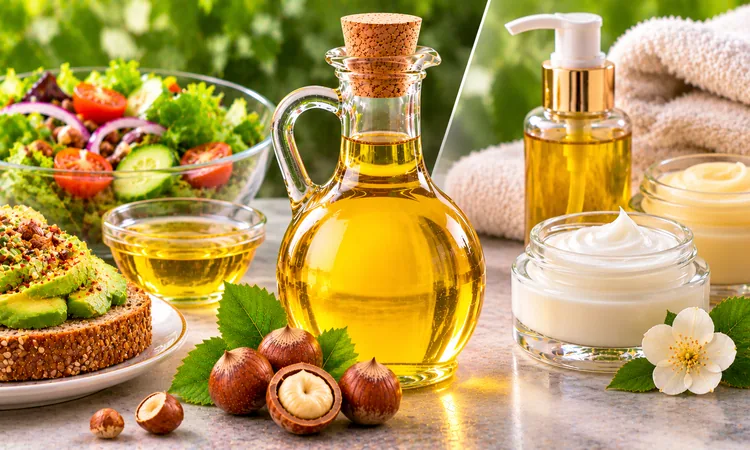
Technical and Commercial Overview
Refined hazelnut oil may be evaluated by food manufacturers and cosmetic formulators, but a product suitable for one industry is not automatically approved for the other.
Both industries may require confirmation of botanical identity, fatty-acid composition, purity, oxidation condition, selected contaminants and product traceability.
The main differences arise from the intended use, regulatory classification, documentation requirements, safety assessment, processing conditions and finished-product claims.
This guide explains how industrial purchasing teams can compare these requirements and develop an appropriate qualification process for refined hazelnut oil.
1. Understanding Food-Grade and Cosmetic-Grade Oil
The terms food grade and cosmetic grade describe different intended uses and qualification expectations. They do not necessarily describe two different botanical oils.
Refined hazelnut oil is obtained from hazelnuts and processed to meet the applicable product characteristics and intended supply requirements.
Whether a particular lot is suitable for food or cosmetic use must be determined through the relevant specification, available evidence, manufacturing conditions and regulatory review.
Food-Grade Considerations
Food-grade evaluation focuses on safe use as an edible ingredient, applicable contaminant limits, permitted processing, allergen requirements, traceability, food-contact packaging and food labeling.
Cosmetic-Grade Considerations
Cosmetic evaluation focuses on ingredient identity, purity, suitability for the intended cosmetic product, safety assessment, formulation stability, ingredient labeling and applicable cosmetic regulations.
2. Food Grade vs Cosmetic Grade: Technical Comparison
Food and cosmetic manufacturers may assess some of the same raw material parameters, but use different acceptance criteria and documentation.
| Assessment area | Food manufacturing | Cosmetic manufacturing |
|---|---|---|
| Ingredient identity | Confirm edible ingredient identity, declared composition and source. | Confirm botanical identity, cosmetic ingredient nomenclature and suitable grade. |
| Regulatory framework | Applicable food safety, ingredient and labeling requirements. | Applicable cosmetic product, ingredient and safety requirements. |
| Fatty-acid composition | Identity, nutritional composition and formulation performance. | Identity, emollient characteristics and formulation consistency. |
| Free fatty acids | Oil condition and refining quality assessment. | Purity, stability and formulation acceptance. |
| Peroxide value | Assessment of primary lipid oxidation. | Oxidation control and ingredient stability assessment. |
| Contaminants | Relevant food contaminant and residue requirements. | Applicable cosmetic impurity and safety requirements. |
| Allergen management | Food allergen assessment and labeling obligations. | Ingredient safety assessment and applicable cosmetic labeling obligations. |
| Microbiological assessment | Based on food safety hazards and product risk. | Based on raw material risk and finished cosmetic product requirements. |
| Shelf-life evaluation | Raw material stability and finished food shelf life. | Raw material stability, formulation compatibility and finished cosmetic stability. |
| Packaging | Suitable food-contact materials and hygienic handling. | Compatible materials meeting relevant product and quality requirements. |
| Traceability | Lot identification, food supply chain records and recall readiness. | Lot traceability, supplier records and cosmetic quality system requirements. |
| Finished-product assessment | Food safety, sensory performance, shelf life and labeling. | Cosmetic safety, stability, compatibility, preservation and claims. |
These differences do not mean one grade is universally purer or superior to the other. The appropriate grade is the material that meets the requirements of the intended application.
3. Analytical Specifications for Refined Hazelnut Oil
Analytical parameters provide evidence about the identity, physical characteristics and chemical condition of refined hazelnut oil.
Atlas Global Trading's supplied product specification includes the following selected acceptance ranges.
| Parameter | Specified limit or range | Technical significance |
|---|---|---|
| Composition | 100% refined hazelnut oil | Declared raw material identity. |
| Oleic acid (C18:1) | 74.2–86.7% | Principal monounsaturated fatty acid. |
| Linoleic acid (C18:2) | 5.2–18.7% | Principal polyunsaturated fatty acid. |
| Palmitic acid (C16:0) | 4.2–8.9% | Component of the saturated fatty-acid fraction. |
| Stearic acid (C18:0) | 0.8–3.2% | Additional saturated fatty-acid component. |
| Free fatty acids | Maximum 0.3% | Indicator relevant to hydrolytic oil condition. |
| Moisture | Maximum 0.2% | Relevant to storage and hydrolytic stability. |
| Peroxide value | Maximum 10 meq/kg | Measures primary oxidation products. |
| Density at 20°C | 0.898–0.915 | Physical identity and mass-volume assessment. |
| Iodine value | 81–92 | Degree of fatty-acid unsaturation. |
| Saponification value | 188–198 mg KOH/g oil | Relevant to fatty-acid molecular characteristics. |
| Refractive index at 20°C | 1.468–1.473 | Physical characterization of the oil. |
| Insoluble impurities | Maximum 0.05% (m/m) | Relevant to cleanliness and refining. |
Fatty-Acid Composition
Refined hazelnut oil is characterized by a high proportion of oleic acid. Linoleic acid, palmitic acid and stearic acid are additional important components.
Fatty-acid analysis can support raw material identification and formulation consistency assessment.
It does not, on its own, establish that the ingredient meets every food or cosmetic regulatory requirement.
Free Fatty Acids and Oxidation
Free fatty acids are associated with hydrolytic breakdown of oils. The supplied specification states a maximum of 0.3%.
Peroxide value measures primary lipid oxidation products. The published limit is a maximum of 10 meq/kg.
Both food and cosmetic manufacturers may require additional oxidation or stability testing according to their intended application.
Contaminant Testing
Relevant impurity and contaminant assessments may include selected metals, mycotoxins, pesticide residues and process-related or environmental contaminants.
The applicable analytical scope depends on source, processing, destination market and intended use.
A food contaminant limit should not automatically be treated as an approved cosmetic impurity limit, or vice versa.
4. Food-Grade Refined Hazelnut Oil Requirements
Food manufacturers must establish that a raw material is suitable for its intended use in a finished food product.
This evaluation involves product identity, applicable safety requirements, formulation behavior, ingredient declarations and appropriate manufacturing controls.
Food Ingredient Identity
Verify that the oil is correctly identified as refined hazelnut oil, including relevant composition and processing information.
Food Safety Parameters
Review applicable contaminant limits, relevant test results, ingredient suitability and safety risks.
Allergen Assessment
Evaluate hazelnut-related allergen considerations, processing information and applicable food labeling obligations.
Processing Compatibility
Assess the oil's performance in mixing, emulsification, baking, heating and other relevant food manufacturing processes.
Food Formulation Considerations
The oil may be evaluated for suitable applications such as bakery products, confectionery fillings, dressings, sauces, prepared foods and related industrial formulations.
Replacing an existing fat ingredient may affect texture, viscosity, stability, sensory properties and finished-product shelf life.
Food manufacturers should carry out suitable trials before changing an approved formulation.
Food-Contact Packaging
Packaging used for edible oil should meet the applicable requirements for food-contact materials.
Drums, liners, transfer hoses and bulk storage equipment must be suitable for the oil and its intended handling conditions.
5. Cosmetic-Grade Refined Hazelnut Oil Requirements
Cosmetic manufacturers may evaluate refined hazelnut oil as an ingredient for suitable skincare, haircare and personal care formulations.
Depending on the finished product, it may be considered as an emollient or a component of the oil phase.
However, the suitability of any particular refined hazelnut oil lot must be established through the manufacturer's qualification process.
INCI Ingredient Identification
A commonly used cosmetic ingredient designation for hazelnut seed oil is Corylus Avellana Seed Oil.
The correct INCI identity and documentation should be verified against the actual material supplied.
Cosmetic Purity and Safety
Cosmetic manufacturers may require relevant impurity information, oxidation parameters, ingredient identity, toxicological information and supporting raw material documentation.
The exact testing and safety assessment depend on the finished product, exposure conditions, formulation and destination market.
Cosmetic Stability and Compatibility
Cosmetic formulations can be affected by oxidative changes, ingredient interactions, emulsion instability and packaging incompatibility.
Manufacturers should evaluate the refined oil in their actual formulation rather than relying only on general raw material data.
Relevant trials may include accelerated stability, storage observation, packaging compatibility and sensory evaluation.
6. Hazelnut Allergens and Safety Considerations
Hazelnuts are recognized tree-nut allergens in many food markets.
The extent of residual allergenic protein in refined oil can depend on the processing method and other factors.
Manufacturers should not assume that refining automatically establishes an allergen-free product.
Food Allergen Review
Food manufacturers should assess applicable allergen declarations, ingredient labeling, processing data and relevant destination-market rules.
Cosmetic Ingredient Safety
Cosmetic formulators should consider relevant sensitization, exposure and safety information as part of finished-product assessment.
Food allergen labeling and cosmetic ingredient labeling are different systems. A declaration prepared for one sector may not provide all information needed by the other.
7. Documentation and Certificates for Industrial Buyers
Documentation is a central part of food and cosmetic raw material qualification.
Buyers should identify the exact documents required under their own quality system before confirming an order.
| Document or information | Why it matters | Availability |
|---|---|---|
| Product specification | Defines general acceptance criteria and ingredient characteristics. | Confirm current specification revision. |
| Certificate of Analysis | Provides analytical results associated with a production lot or sample. | Request confirmation of available lot-specific data. |
| Fatty-acid profile | Supports raw material identification and formulation review. | Confirm required parameters and analytical method. |
| Allergen information | Supports applicable safety and labeling assessments. | Verify declaration scope and supporting evidence. |
| Contaminant information | Supports review of relevant chemical and environmental risks. | Specify required analytes and acceptance limits. |
| Ingredient identity documentation | Supports botanical identity, source and correct material description. | Confirm appropriate documentation for the intended market. |
| Cosmetic-specific ingredient information | May support INCI verification, safety and raw material evaluation. | Confirm what evidence is available for the specific oil. |
| Packaging documentation | Supports review of material compatibility and handling suitability. | Confirm the selected packaging system. |
| Origin and traceability records | Support product identification and supply chain review. | Confirm the relevant shipment and lot information. |
Certificate of Analysis Versus Product Specification
A general product specification lists the characteristics and acceptance limits applicable to the material.
A certificate of analysis reports available analytical results for a specific lot or sample.
Buyers should not treat a general specification as proof that a particular shipment has already been tested against every requested parameter.
8. Recommended Raw Material Qualification Process
A structured qualification procedure can help buyers compare raw material requirements before purchasing refined hazelnut oil.
- Define the intended use. Establish whether the ingredient will be used in food, cosmetics or a different industrial application.
- Identify applicable requirements. Review the relevant market regulations, internal quality criteria and finished-product needs.
- Compare technical specifications. Assess the published oil characteristics against the required raw material limits.
- Determine analytical testing. Select relevant identity, purity, oxidation, contaminant and other tests.
- Review supplier documentation. Check current specifications, available lot data, declarations and traceability information.
- Conduct laboratory trials. Evaluate the oil under controlled formulation conditions.
- Assess product stability. Consider oxidation, sensory changes, formulation behavior and packaging compatibility.
- Complete safety and regulatory review. Confirm that the intended application satisfies applicable requirements.
- Approve packaging and logistics. Verify container compatibility, receiving equipment and storage arrangements.
- Document the final decision. Record the approved specification, supplier, grade, test methods and purchasing conditions.
Controlled Formulation Trials
Pilot trials should compare the proposed refined hazelnut oil formulation with an appropriate control or existing formulation.
Relevant observations may include process behavior, appearance, odor, texture, viscosity, emulsion stability, oxidation and shelf-life performance.
Testing should reflect the actual manufacturing process and expected product storage conditions.
9. Regulatory and Intended-Use Limitations
Food products, cosmetics and pharmaceutical products are subject to different regulatory frameworks.
A raw material that meets a general food specification should not automatically be represented as a pharmaceutical ingredient.
Likewise, a botanical oil considered in cosmetic research should not be assumed approved for medical or therapeutic uses.
The regulatory treatment of the finished product depends on factors including the intended use, composition, claims and destination market.
10. Bulk Purchasing for Food and Cosmetic Manufacturers
Technical qualification should be coordinated with commercial purchasing requirements.
Atlas Global Trading handles inquiries for 100% refined hazelnut oil supplied in industrial and wholesale quantities.
Available inquiry formats include 30 kg, 60 kg and 200 kg plastic drums, export flexitanks and large-volume road tanker shipments.
| Packaging format | Published quantity | Purchasing consideration |
|---|---|---|
| Plastic drum | 30 kg net | Smaller industrial handling units and stock management. |
| Plastic drum | 60 kg net | Intermediate quantities for manufacturing facilities. |
| Plastic drum | 200 kg net | Larger manufacturing demand with suitable handling equipment. |
| Export flexitank | Shipment-dependent | Suitable containerized bulk liquid deliveries. |
| Bulk road tanker | 20 tonnes and above | High-volume shipments requiring compatible receiving infrastructure. |
Technical Information to Include in an Inquiry
- Intended application: food manufacturing or cosmetic formulation.
- Required net quantity in kilograms or metric tonnes.
- Preferred packaging format.
- Required product specification and analytical limits.
- Required certificate of analysis or supporting declarations.
- Destination country and delivery location.
- Preferred shipment period.
- One-time or recurring purchasing requirements.
- Any special packaging or unloading requirements.
International Supply and Documentation
International orders may require commercial invoices, packing lists, transport documents, origin information and relevant product records.
The exact requirements depend on the importing country, selected delivery terms and intended product use.
Importers should verify their destination-market obligations before finalizing the order.
Commercial Terms
Prices, availability, minimum quantities, shipment schedules, documentation and delivery conditions are confirmed for individual inquiries.
This article does not constitute a fixed offer or guarantee that a particular grade, certificate or shipment arrangement is available.
11. Storage and Shelf-Life Considerations
Storage requirements remain important regardless of whether refined hazelnut oil is being evaluated for food or cosmetic applications.
The supplied product information recommends storage in a cool, dry location protected from direct sunlight.
Suitable containers and controlled transfer procedures help reduce unnecessary exposure to air, moisture and contamination.
The published shelf-life statement is 24 months under specified storage conditions. Remaining shelf life must be verified for individual shipments.
Finished food and cosmetic products require their own stability assessments. The raw material's declared shelf life does not establish the shelf life of the finished formulation.
12. Key Considerations Before Approving Refined Hazelnut Oil
- Food and cosmetic applications can require different specifications and supporting documents.
- Botanical identity and fatty-acid composition are important in both sectors.
- General food-grade status does not automatically establish cosmetic suitability.
- Cosmetic ingredient acceptance does not automatically establish food suitability.
- Lot-specific analytical results should be reviewed where required by the buyer.
- Allergen and ingredient-labeling requirements need application-specific review.
- Product stability must be assessed in the finished formulation.
- Packaging, storage and international documentation should be agreed before a bulk purchase.
Discuss Your Refined Hazelnut Oil Requirements
Are you evaluating refined hazelnut oil for food manufacturing, cosmetic formulation or industrial research? Send Atlas Global Trading your required quantity, packaging format, destination, intended use and technical documentation needs.
Contact Our TeamRelated Technical Articles
This article provides general technical and commercial guidance. It is not a certification, regulatory approval, formal safety assessment or substitute for application-specific testing. Buyers must verify the actual product grade, documentation, applicable laws and intended-use suitability.