
Technical and Commercial Overview
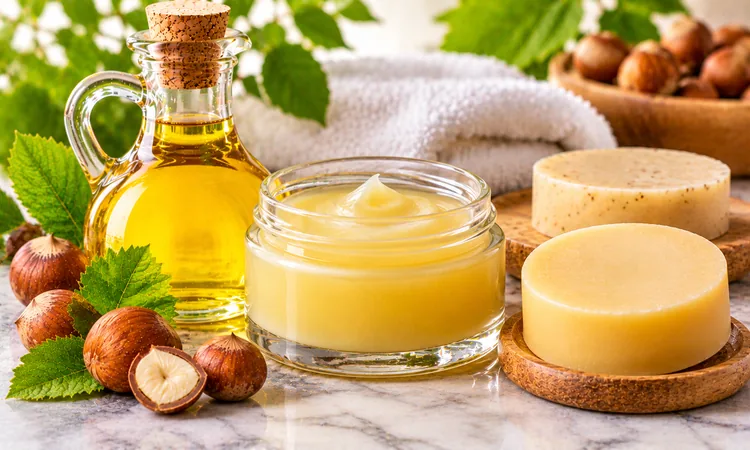
Cleansing balms are generally structured oil-based cosmetic formulations designed to maintain a solid or semi-solid consistency under specified storage conditions while softening or spreading during application.
These formulations may combine liquid oils, waxes, solid lipids, emollients and, where rinsing is required, appropriate emulsifiers or surfactants.
Refined hazelnut oil may be evaluated as part of the liquid oil phase, contributing to the formulation's spreadability and sensory characteristics.
Because refined hazelnut oil is a liquid ingredient under ordinary handling conditions, the finished balm's hardness, structure and temperature resistance depend on the complete formulation and processing method.
This guide covers the technical, manufacturing, safety and commercial considerations relevant to cosmetic manufacturers assessing refined hazelnut oil for balm and solid cleansing systems.
1. Applications of Refined Hazelnut Oil in Cleansing Balms
Cleansing balms may be designed for a variety of cosmetic cleansing applications.
The appropriate formulation depends on the intended texture, use method, cleansing performance and safety requirements.
Makeup Removal Balms
Structured oil formulations may be used to help dissolve or mobilize certain lipophilic makeup ingredients. Actual removal performance depends on the entire formula and must be tested.
Self-Emulsifying Cleansing Balms
These products may incorporate suitable emulsifiers so the balm forms a dispersion when mixed with water during rinsing.
Soft Cleansing Balms
Semi-solid products may be designed to soften readily during application while maintaining suitable consistency in their container.
Solid Cleansing Formats
More highly structured products may use appropriate solid ingredients to obtain the required shape, handling properties and performance.
Role of the Liquid Oil Phase
The liquid oil phase can influence how the balm spreads, softens and interacts with cosmetic residues.
Refined hazelnut oil may be one component of that phase, but its use should be assessed alongside waxes, structuring lipids and other cosmetic ingredients.
A change in liquid oil composition can alter the final product's hardness, sensory properties and structural stability.
Finished-Product Performance
The balm should meet the manufacturer's desired profile for texture, application, makeup removal, rinsability and packaging performance.
Those outcomes are formulation-specific and cannot be guaranteed from the refined hazelnut oil specification alone.
2. Technical Properties of Refined Hazelnut Oil
Refined hazelnut oil is characterized by its fatty-acid composition and selected physical and chemical properties.
These parameters are relevant to ingredient identification, quality assessment and formulation development.
| Parameter | Published specification | Formulation relevance |
|---|---|---|
| Composition | 100% refined hazelnut oil | Raw material identity and formulation documentation. |
| Oleic acid | 74.2–86.7% | Dominant monounsaturated fatty-acid component. |
| Linoleic acid | 5.2–18.7% | Polyunsaturated fatty-acid composition. |
| Palmitic acid | 4.2–8.9% | Saturated fatty-acid component. |
| Stearic acid | 0.8–3.2% | Additional saturated fatty acid. |
| Free fatty acids | Maximum 0.3% | Relevant to oil condition and refining quality. |
| Moisture | Maximum 0.2% | Relevant to raw material quality and storage. |
| Peroxide value | Maximum 10 meq/kg | Indicator of primary lipid oxidation. |
| Density at 20°C | 0.898–0.915 | Physical identity and mass-volume calculations. |
| Iodine value | 81–92 | Characterizes unsaturation of the oil. |
| Saponification value | 188–198 mg KOH/g | Characterizes fatty-acid-related oil properties. |
| Refractive index at 20°C | 1.468–1.473 | Supports physical oil characterization. |
| Insoluble impurities | Maximum 0.05% (m/m) | Relevant to ingredient cleanliness. |
Fatty-Acid Composition
Oleic acid represents the largest specified fraction of the refined hazelnut oil's fatty-acid profile.
This may influence the formulation's liquid lipid characteristics, but cannot independently determine hardness, melting point or storage stability of a balm.
Oxidation Condition
Unsaturated oils may undergo oxidative change during storage and processing.
Cosmetic manufacturers should consider raw material oxidation indicators and finished-product stability together.
Liquid Oil Behavior
Refined hazelnut oil is used as a liquid oil rather than a primary structuring wax or solid lipid.
Its influence on a balm should be assessed through the complete structured oil formulation.
3. Wax and Oil Structuring in Cleansing Balms
Cleansing balms commonly rely on a network of structured ingredients to retain the liquid oil phase.
Such systems can contain suitable waxes, solid lipids or other structuring agents.
The formulation's firmness depends on the amounts and properties of those ingredients, together with processing conditions.
Liquid Oil Phase
Refined hazelnut oil may be incorporated into the liquid phase to influence spreadability, texture and other sensory characteristics.
Structuring Ingredients
Waxes and compatible solid lipids may create a structural network that contributes to the required balm firmness and shape retention.
Emulsification Ingredients
When rinse-off performance is required, suitable emulsifiers may be incorporated to support dispersion on contact with water.
Other Cosmetic Ingredients
Additional ingredients may be included according to the desired formulation, provided compatibility, safety and regulatory suitability are established.
Balance Between Firmness and Spreadability
A balm that is too hard may be difficult to apply or dispense from its packaging.
Conversely, an insufficiently structured formula may be too soft or lose shape under warmer conditions.
The formulator should select a balance that supports both intended storage and consumer use.
Effect of Changing the Oil Phase
Replacing a portion of an existing liquid oil with refined hazelnut oil may affect structural consistency and thermal behavior.
Even where two oils appear similar in fluidity, their interaction with a wax network may differ.
Controlled pilot testing is necessary before changing an approved manufacturing formula.
4. Melting Behavior, Softening and Thermal Performance
Balm formulations may be designed to remain sufficiently firm at expected storage temperatures while softening during application.
The transition from a solid or semi-solid state depends on the complete blend of oils, waxes and other structured lipids.
Melting Range Versus a Single Melting Point
Many structured lipid systems do not melt at one sharply defined temperature.
Instead, the formulation may soften gradually over a temperature range.
The relevant behavior should be assessed using appropriate physical and thermal testing.
Softening During Application
A cleansing balm may be designed to soften during application, allowing the oil phase to spread across the skin.
The rate of softening depends on the formula, applied pressure, temperature and use conditions.
Heat Resistance in Distribution
Commercial products may encounter temperatures above normal laboratory storage conditions during freight or warehousing.
High-temperature exposure may affect firmness, appearance and structural stability.
Manufacturers should assess the expected distribution conditions before approving a balm formula.
Low-Temperature Behavior
Cooling may change crystallization, hardness and product appearance.
A formulation that appears acceptable at room temperature should also be assessed across relevant storage temperatures.
5. Crystallization, Graininess and Oil Separation
Structured balm systems may experience changes in crystal organization during cooling, storage or repeated temperature fluctuations.
The resulting physical changes can influence visual appearance, texture, hardness and consumer acceptance.
Graininess
Grainy texture may develop when certain solid lipid components form or reorganize into larger crystals during storage.
Oil Bleeding
A structured network may fail to retain all the liquid oil, leading to visible oil release or surface separation.
Surface Changes
Temperature and crystallization effects may produce changes in surface appearance, including uneven texture or other visible structural differences.
Hardness Variation
Structural changes may alter balm firmness during the intended storage period, affecting application and dispensing.
Cooling Rate
Cooling conditions can influence crystal formation and the resulting structure of wax- and lipid-containing balms.
Controlled cooling trials may help manufacturers identify conditions that produce more consistent texture.
Repeated Heat-Cool Cycles
Temperature fluctuations during storage and shipping may cause structural changes even when the product appears acceptable immediately after filling.
Heat-cool cycling can therefore be useful when evaluating a balm's physical stability.
Ingredient Compatibility
Changes in the liquid oil phase may influence the behavior of the structuring system.
Refined hazelnut oil should be evaluated in the actual wax and oil blend rather than assessed in isolation.
6. Makeup Removal, Rinsability and Sensory Performance
Cleansing balms may be formulated to help mobilize certain oil-compatible makeup and skin-surface residues.
The effectiveness of that process depends on the finished formulation and the material being removed.
Makeup Removal Performance
Makeup products can contain oils, waxes, pigments and film-forming materials with differing removal characteristics.
Manufacturers should test representative makeup systems under realistic application conditions.
Rinse-Off Systems
A balm made from oils and waxes does not necessarily rinse cleanly with water.
Rinse-off cleansing balms generally require a suitable emulsification system to support dispersion when water is introduced.
Sensory Characteristics
Relevant sensory parameters may include spreading, softness, ease of scooping, initial texture, perceived residue and after-feel.
All these characteristics depend on the complete product.
Comparison With Liquid Cleansing Oils
Liquid cleansing oils and structured cleansing balms may use overlapping oil-phase ingredients, but differ in physical structure and application experience.
A liquid cleansing oil should not be assumed convertible into a solid balm without reformulation.
7. Cleansing Balm Formulation Development
Cosmetic formulators should define the intended product characteristics before selecting refined hazelnut oil concentration or structuring ingredients.
The formulation may need to achieve a balance between solid appearance, ease of application, cleansing performance and acceptable storage stability.
Development Variables
- Type and proportion of liquid oils.
- Identity and concentration of structuring ingredients.
- Softening and melting behavior.
- Compatibility of oil and wax phases.
- Selection of emulsifiers or surfactants for rinse-off products.
- Processing temperature and mixing procedure.
- Cooling rate and crystallization conditions.
- Desired hardness and sensory properties.
- Oxidation control and product stability.
- Packaging and dispensing performance.
Controlled Formulation Trials
A structured trial program should compare candidate formulations under consistent laboratory conditions.
Changes to the liquid oil fraction should be separated from changes in wax or emulsifier composition where possible.
This helps the development team understand which variables influence the final balm's performance.
Illustrative Development Sequence
- Define the intended product. Establish desired hardness, application, rinsability and packaging characteristics.
- Qualify raw materials. Review refined hazelnut oil and other ingredient specifications.
- Select a structuring system. Evaluate compatible waxes or other suitable solid constituents.
- Design the oil phase. Select the candidate liquid oil blend and assess its interaction with the structuring system.
- Prepare pilot batches. Use documented manufacturing and cooling conditions.
- Measure physical properties. Evaluate hardness, softening, graininess and phase separation.
- Assess cleansing performance. Evaluate makeup removal, spreading and rinse-off characteristics.
- Conduct stability and safety testing. Assess relevant quality and regulatory parameters.
- Confirm packaging compatibility. Evaluate the actual container and dispensing method.
- Validate production-scale manufacture. Confirm consistent behavior before commercial release.
8. Industrial Manufacturing of Cleansing Balms
Commercial balm manufacturing requires suitable equipment and control over ingredient addition, mixing, thermal processing, cooling and filling.
Process conditions can affect the final crystal structure, hardness and product consistency.
Raw Material Receiving
Incoming refined hazelnut oil should be assessed against the manufacturer's approved raw material specification.
Receiving procedures may include lot identification, packaging inspection, documentation review and selected quality checks.
Heating and Mixing
Where required by the chosen formulation, structured ingredients may need controlled heating and mixing to produce the desired processing state.
Excessive or unnecessary heat exposure should be assessed because it may affect ingredient stability.
No universal processing temperature is recommended for all cleansing balm formulations.
Controlled Cooling
Cooling conditions can affect the structure and appearance of a finished balm.
Manufacturers should establish suitable filling and cooling procedures for the selected formulation and packaging.
Industrial Scale-Up
Laboratory results may differ at production scale because of changes in mixing, heat transfer, filling and cooling conditions.
Scale-up trials should confirm repeatable product hardness, appearance, stability and performance.
Batch Documentation
Manufacturing records should identify raw material lots, ingredient quantities, processing conditions and relevant quality results.
Appropriate documentation supports consistency and traceability within the manufacturer's quality system.
9. Cosmetic Safety, INCI and Regulatory Qualification
Cosmetic manufacturers must determine whether the complete cleansing balm is suitable for its intended application and destination market.
The safety of the finished product cannot be established from the raw vegetable oil specification alone.
INCI Identification
Corylus Avellana Seed Oil is a commonly used cosmetic INCI designation for hazelnut seed oil.
The cosmetic manufacturer should verify the correct name, botanical identity and ingredient documentation for the actual supplied oil.
Skin and Eye-Area Use
Cleansing balms may be intended for facial use or makeup removal near the eyes.
Any intended eye-area application requires appropriate finished-product safety assessment and supporting tolerance evaluation.
No universal eye-area safety or sensitive-skin claim is made here.
Hazelnut and Sensitivity Assessment
Hazelnuts are tree nuts. Cosmetic formulators should consider relevant ingredient information, processing and possible sensitivity risks as part of product safety qualification.
Refined hazelnut oil should not automatically be described as allergen-free.
Anhydrous Systems and Preservation
Anhydrous balm formulations may present different microbiological risks compared with water-containing cosmetic emulsions.
However, water may be introduced during use, and packaging or consumer handling can influence contamination risks.
The appropriate preservation strategy should be determined by the finished-product safety assessment.
Regulatory Compliance
Cosmetic products must satisfy the applicable legal requirements of the destination market.
This may include ingredient labeling, safety assessment, manufacturing controls, traceability and substantiation of consumer claims.
10. Balm Stability, Oxidation and Packaging Compatibility
Stability testing is particularly important in structured lipid formulations because both chemical and physical changes may affect the consumer experience.
Physical Stability
Relevant observations may include changes in hardness, graininess, oil separation, surface appearance and product homogeneity.
Formulations should be evaluated under relevant storage and distribution conditions.
Thermal Cycling
Repeated temperature changes may influence wax crystallization and other structured lipid behavior.
Heat-cool cycling may be used as part of a physical stability program.
Oxidative Stability
Refined hazelnut oil contains unsaturated fatty acids susceptible to oxidative deterioration under certain conditions.
Oxidation control may involve suitable packaging, storage conditions and formulation design.
Manufacturers should select appropriate analytical and sensory evaluations for their finished formula.
Packaging Compatibility
Cosmetic balm packaging should be suitable for the actual formulation and intended use conditions.
Jars, tubes or other dispensing systems may require different physical and compatibility assessments.
Potential considerations include leakage, closure integrity, interaction with packaging materials and dispensing performance.
Shelf Life
The supplied refined hazelnut oil information states a shelf life of 24 months under specified storage conditions.
This does not mean a finished cleansing balm automatically has a 24-month shelf life.
Shelf-life and period-after-opening decisions, where applicable, require appropriate finished-product evidence.
11. Quality Control and Pilot Testing Checklist
Manufacturers should assess both incoming ingredient quality and finished balm performance.
A suitable pilot testing program helps identify issues before commercial scale production.
| Evaluation | Technical purpose | Relevant observations |
|---|---|---|
| Oil identity | Confirm incoming refined hazelnut oil. | Specification, documentation and lot identification. |
| Raw oil oxidation | Assess incoming oil condition. | Peroxide value and other relevant indicators. |
| Hardness | Assess balm firmness. | Texture and penetration measurements as appropriate. |
| Softening and melting | Review thermal behavior. | Changes in structure across relevant temperatures. |
| Crystallization | Evaluate structural consistency. | Crystal-related texture and appearance changes. |
| Graininess | Assess sensory texture. | Visible or tactile grain formation during storage. |
| Oil separation | Evaluate network stability. | Oil release or phase separation. |
| Thermal cycling | Assess response to temperature fluctuations. | Hardness, surface changes and separation. |
| Cleansing performance | Assess intended product function. | Removal of representative makeup materials. |
| Rinsability | Evaluate water dispersion where applicable. | Emulsification and residual feel. |
| Sensory testing | Assess application experience. | Spreadability, slip, texture and after-feel. |
| Cosmetic safety | Support product approval. | Relevant safety and tolerance assessments. |
| Microbiological risk | Determine suitable contamination controls. | Risk assessment and testing as appropriate. |
| Packaging compatibility | Confirm storage and dispensing suitability. | Container stability, leakage and interaction. |
| Shelf-life validation | Establish acceptable product life. | Validated stability results and relevant storage data. |
Batch-to-Batch Consistency
Production batches should be compared against suitable specifications for raw material quality and final product characteristics.
Where relevant, the manufacturer should define acceptable ranges for firmness, appearance and sensory performance.
Evaluation After Storage
A balm that appears acceptable shortly after manufacture may undergo physical changes during storage.
Manufacturers should therefore repeat relevant assessments at suitable intervals under defined storage conditions.
12. Wholesale Refined Hazelnut Oil for Cleansing Balm Manufacturing
Atlas Global Trading focuses on the international bulk supply of 100% refined hazelnut oil.
Cosmetic manufacturers evaluating the oil for cleansing balms can communicate their raw material requirements and intended application during the purchasing process.
Available Bulk Packaging Formats
| Packaging | Published quantity | Commercial consideration |
|---|---|---|
| Plastic drum | 30 kg net | Smaller industrial bulk handling units. |
| Plastic drum | 60 kg net | Intermediate manufacturing quantities. |
| Plastic drum | 200 kg net | Larger industrial quantities with suitable handling equipment. |
| Export flexitank | Shipment-dependent | Containerized bulk liquid supply subject to equipment and route suitability. |
| Bulk road tanker | 20 tonnes and above | High-volume deliveries requiring appropriate receiving infrastructure. |
Packaging Selection for Cosmetic Manufacturers
Drum packaging may be appropriate for facilities requiring separate handling units and controlled inventory.
Flexitanks or bulk road tankers may be considered for larger orders where suitable receiving infrastructure is available.
Buyers should assess the total cost of packaging, freight, unloading, warehousing and liquid transfer.
Technical Documentation
Cosmetic buyers may require a current product specification, available lot-specific analytical information, fatty-acid profile and other relevant ingredient documentation.
Additional quality requirements should be identified before the order is commercially agreed.
Availability of particular certificates or analytical reports must be confirmed for the selected transaction.
International Export Requirements
International buyers should provide the destination country, port or delivery location and relevant import requirements.
Freight arrangements, commercial delivery terms, document requirements and shipment schedules depend on the order.
Information for a Bulk Quotation
- Product: 100% refined hazelnut oil.
- Intended use: cleansing balm or solid cosmetic cleanser.
- Required net quantity in kilograms or metric tonnes.
- Preferred packaging format.
- Destination country and delivery location.
- Required oil specifications and acceptance limits.
- Requested cosmetic ingredient documentation.
- Expected shipment or delivery period.
- Receiving and warehouse requirements.
- One-time or recurring purchasing expectations.
For more information about available industrial formats, review bulk packaging. International buyers can also consult the export and logistics page.
13. Key Technical Considerations
- Refined hazelnut oil may be evaluated as a liquid oil-phase ingredient in suitable cleansing balm formulations.
- The finished balm's firmness depends on suitable waxes or other structuring ingredients, not the liquid oil alone.
- Oil and wax compatibility should be evaluated in the complete formulation.
- Melting and softening behavior must be appropriate for storage, distribution and consumer use.
- Crystallization, graininess and oil separation are important physical stability considerations.
- A cleansing balm does not automatically rinse off with water unless a suitable emulsification system is incorporated.
- Cosmetic safety, performance and finished-product stability require independent validation.
- Pilot processing and commercial scale-up should be assessed for structural consistency.
- Bulk procurement requires agreement on quantity, packaging, destination, technical specifications and commercial conditions.
Request Bulk Refined Hazelnut Oil for Cosmetic Balm Development
Developing cleansing balms, structured oil cleansers or related cosmetic formulations? Contact Atlas Global Trading with your required volume, packaging preference, destination, intended application and technical documentation requirements.
Contact Our Sales TeamRelated Cosmetic Application Articles
This article provides general cosmetic formulation and commercial guidance. It does not establish cosmetic-grade certification, validated cleansing performance, eye-area suitability, pharmaceutical approval or finished-product safety. Manufacturers must verify ingredient grade, formulation suitability, stability, applicable regulations and supporting evidence for their actual finished products.